
Mystery Today, Skills Tomorrow
Posted by Robyn Thomas on 1st Sep 2026
The Skills You’re Learning Without Even Realizing It
If you’re a beginning quilter, signing up for a Cotton Cuts Puzzle Mystery Quilt (PMQ) might seem like you’re simply signing up for a fun monthly mystery. You get your precut pieces, follow the clues, and slowly watch a quilt come together.
But there’s something else happening along the way.
You’re learning to quilt.
Month after month, the PMQ is quietly teaching you fundamental sewing skills that will build your confidence and prepare you to take on bigger, more challenging projects. And the best part? You may not even realize how much you’re learning until you look back at how far you’ve come.
Here are some of the skills I’ve learned through sewing PMQs—and, honestly, I didn’t even know I was learning them at the time!
1. The Importance of a Consistent Seam Allowance
One of the first things you’ll discover is that a consistent ¼-inch seam allowance matters. A lot.
Keeping that seam allowance as close to a scant ¼ inch as possible helps your pieces fit together the way they’re supposed to. When your seams are consistent, your blocks come together more smoothly, your points have a better chance of lining up, and your finished quilt will look more polished.
It may feel like a small detail when you’re starting out, but this is a skill you’ll carry into every sewing project you make.
The PMQ gives you plenty of practice without making you stop and think, “Today I’m going to practice my seam allowance.” You’re simply sewing the clue—and getting better along the way.
2. Learning to Line Up Your Pieces
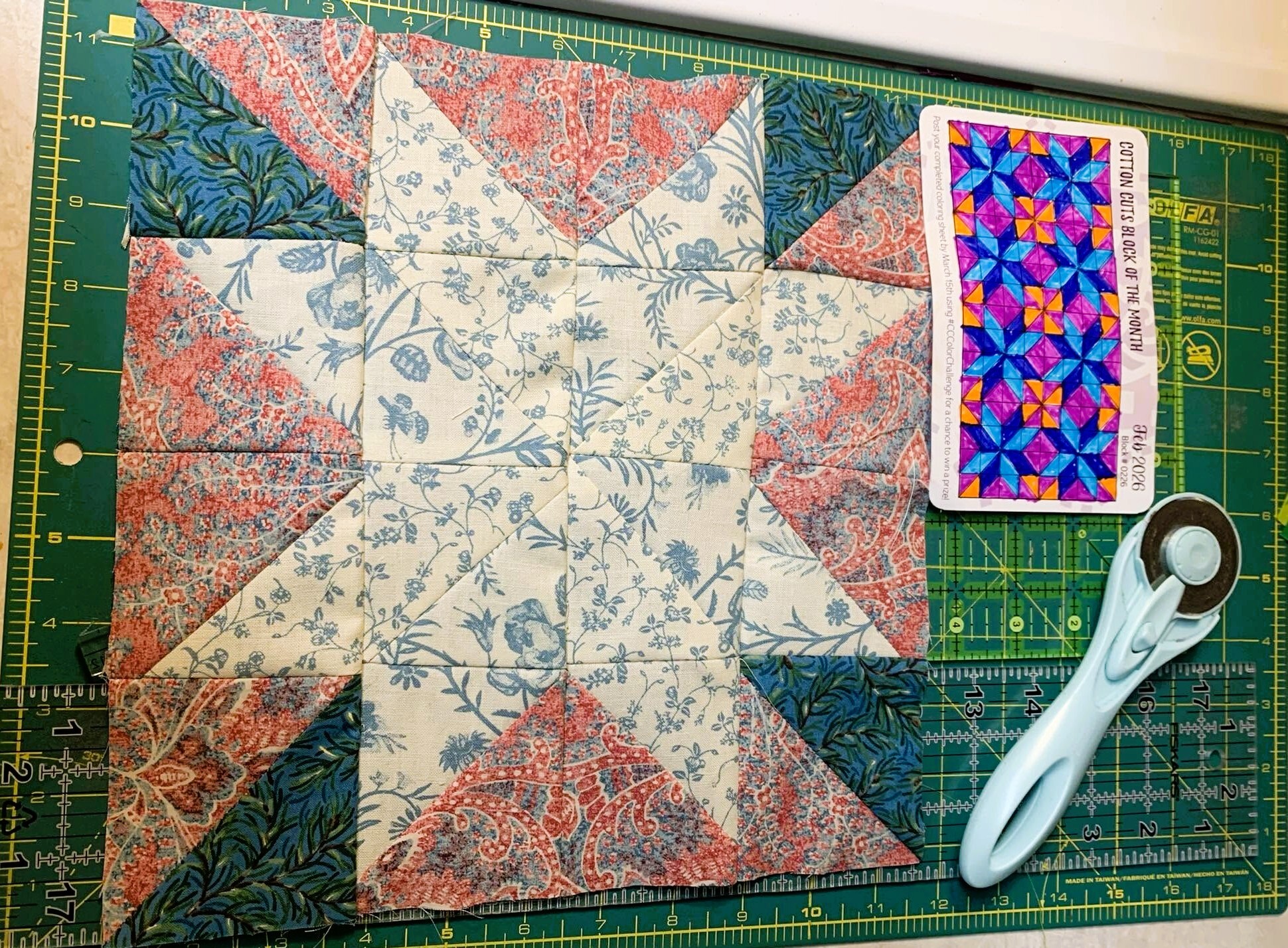
As your skills grow, you’ll also become more comfortable sewing blocks and shapes together.
At first, you might want to use clips or pins to hold everything in place as you sew. Taking that extra moment to line up your seams and secure your pieces can make a big difference, especially when you’re working with points and multiple seams.
And here’s a fun thing that happens as you gain experience: eventually, you may find yourself needing fewer pins or clips because you can simply eyeball your pieces and know they’re lined up correctly.
I know I’ve reached that point with some projects, and it’s one of those little moments when you realize, Hey, I’m actually getting better at this!
3. Discovering Why Pressing Matters
If you’re new to quilting and you don’t particularly enjoy pressing, the PMQ may change your mind—or at least convince you that pressing is important!
Pressing your seams as you go helps your pieces lay flat and makes it much easier to line everything up when you move on to the next step.
And those little arrows in your instructions? Pay attention to them.
Someone has already done the work of figuring out which direction your seams should be pressed. Following those instructions can help your seams nest together, making it easier to match points and intersections.
Open Seams or Pressed to One Side?
You’ll eventually encounter different approaches to pressing, including pressing seams open or pressing them to one side.
I’ve used both.
Open seams can create a flatter finished piece, but they can also put more stress on the thread along the seam. Ultimately, there are different opinions and preferences, and it’s worth trying both methods to see what works best for you.
The important lesson is that pressing is part of the process, not an optional extra step.
4. Building Confidence with Larger Sections
By the time you reach Clue 10 and final assembly, you’ve already been practicing all of these skills for months.
Now you’re taking those smaller sections and beginning to build larger pieces of the quilt.
Suddenly, the pieces you’ve been sewing individually start becoming a bigger picture—and you’ll find yourself using those same skills all over again.
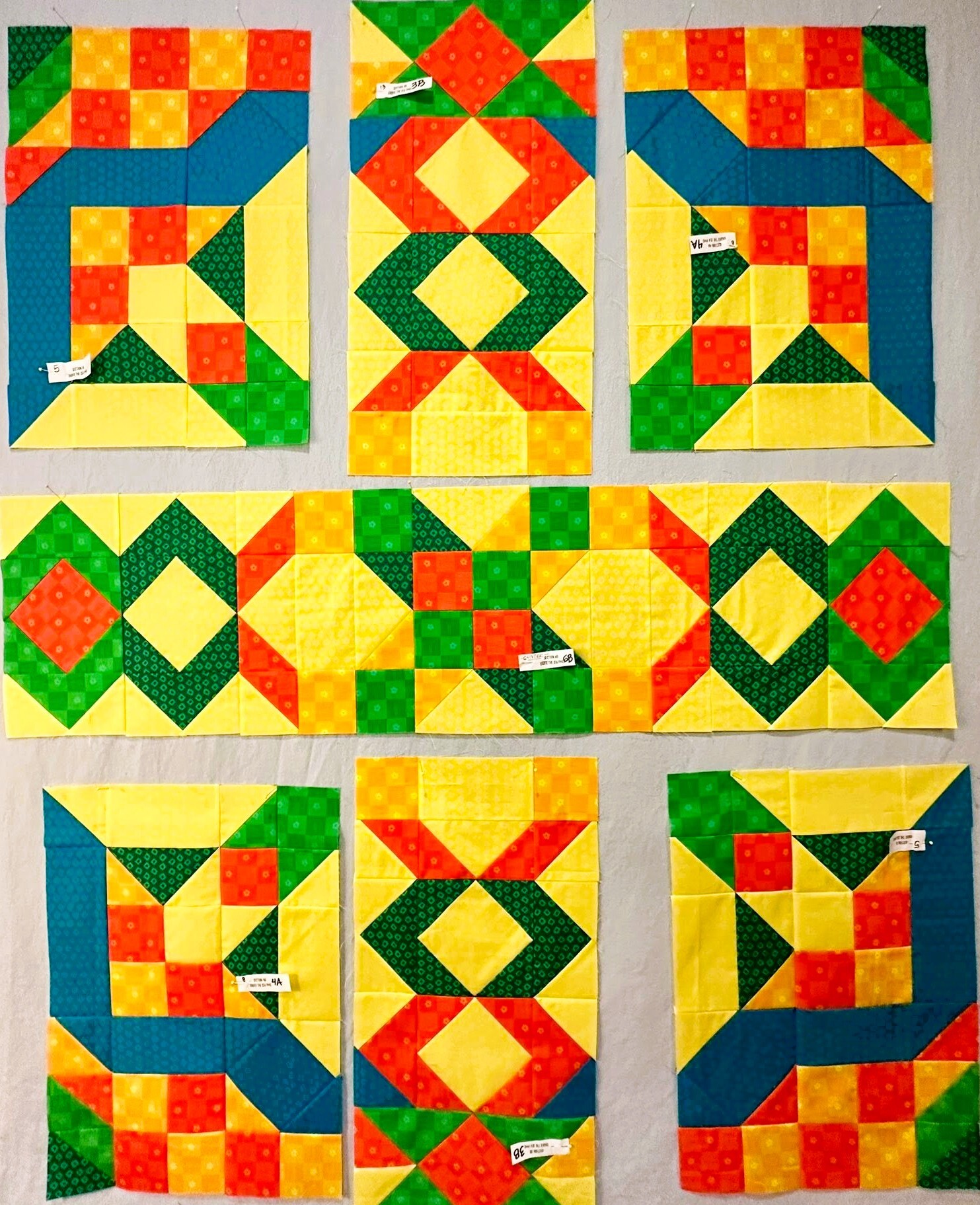
Clips and pins become especially helpful as you bring larger sections together. You’ll need to carefully line up seams, intersections and points before sewing.
But this time, you’re not starting from scratch.
You’ve been practicing all along.
5. Learning to Check Your Measurements
Have you noticed that your PMQ instructions tell you what each completed section should measure?
Those measurements are there for a reason.
Checking your finished piece against the measurement in the instructions gives you an opportunity to catch a problem before it becomes a bigger problem during final assembly.
Are you a perfectionist? You’ll probably measure everything.
Not a perfectionist? You might be more like me and think, “It’s close enough!”
Either way, those measurement checks are teaching you an important quilting skill: accurate piecing matters.
Even a small difference can become more noticeable when you start joining multiple sections together. Learning to check your measurements now will serve you well when you eventually tackle projects where you’re doing all the cutting, piecing and measuring yourself.
6. Developing an Appreciation for a Good Cut
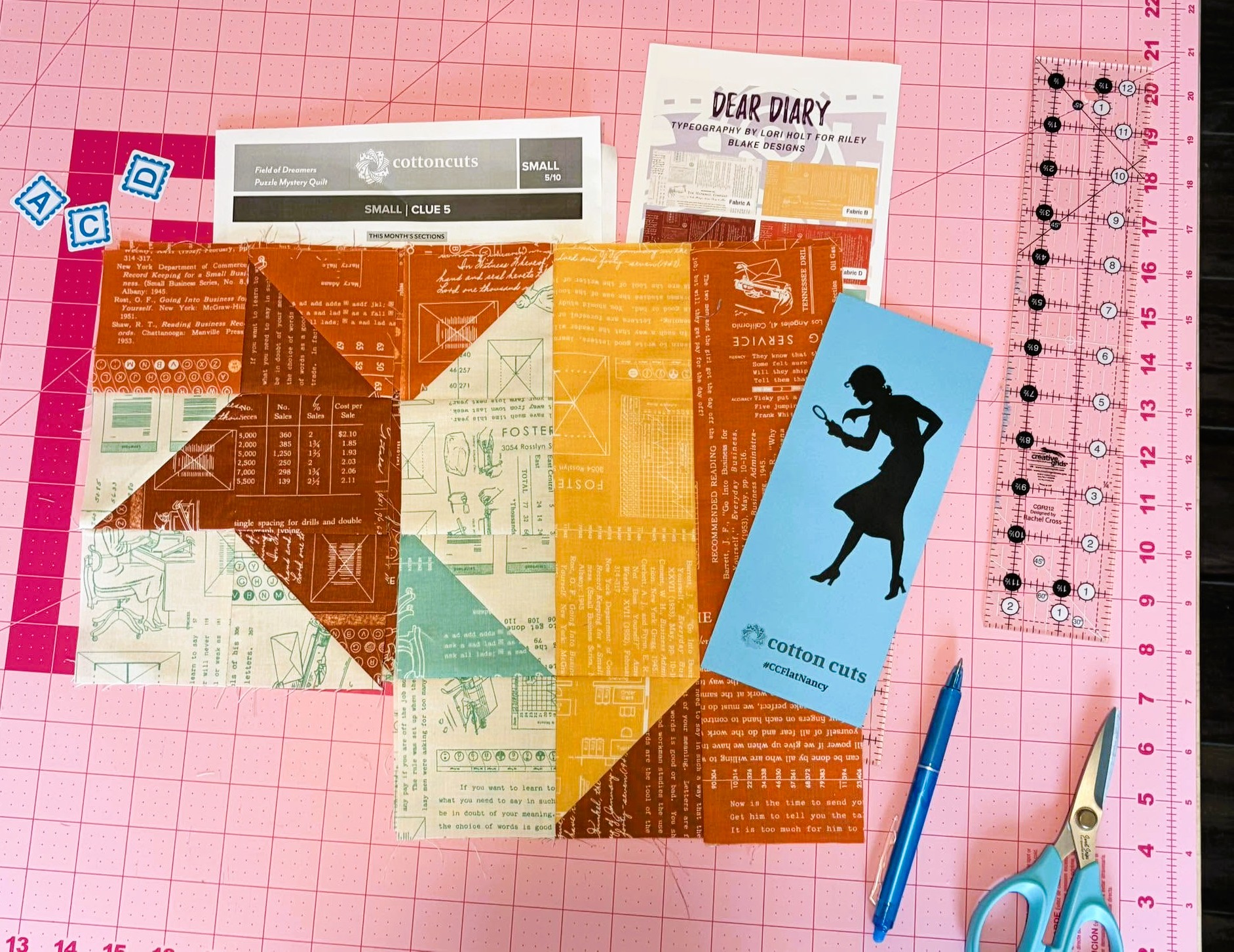
And then there’s one of the biggest benefits of a PMQ for a beginning quilter: the pieces are already cut for you.
At first, that might simply feel convenient. You don’t have to worry about cutting fabric accurately before you can start sewing.
But as you sew those precut pieces together month after month, something else starts to happen.
You begin to understand just how important accurate cutting is.
When your pieces are cut correctly, they fit together beautifully. When you eventually move on to a project where you’re responsible for cutting your own fabric, you’ll have a much better appreciation for why those measurements and cutting lines need to be precise.
In a way, the PMQ lets you skip the cutting step while still teaching you why cutting matters.
And when you’re ready to pick up that rotary cutter and tackle it yourself, you’ll have a much clearer understanding of what you’re trying to achieve.
You’re Learning More Than You Think
One of the things I love about the Puzzle Mystery Quilt is that it doesn’t require you to master everything before you begin.
You simply start.
You follow the instructions. You sew your pieces. You press your seams. You line things up. You check your measurements. Then you do it all again the following month.
And somewhere along the way, you realize that something that once seemed difficult has become second nature.
That’s the beauty of learning through doing.
So, if you’re a beginning quilter wondering whether you’re ready to take on a Puzzle Mystery Quilt, remember this:
You don’t have to know everything before you start.
The PMQ can help you learn as you go, building fundamental skills one clue at a time. And by the time you reach that final assembly, you may be surprised by just how much you’ve learned—and how much more confident you’ve become.
The mystery may be what the quilt will look like.
But one thing isn’t a mystery at all:
You’re going to become a better quilter along the way.